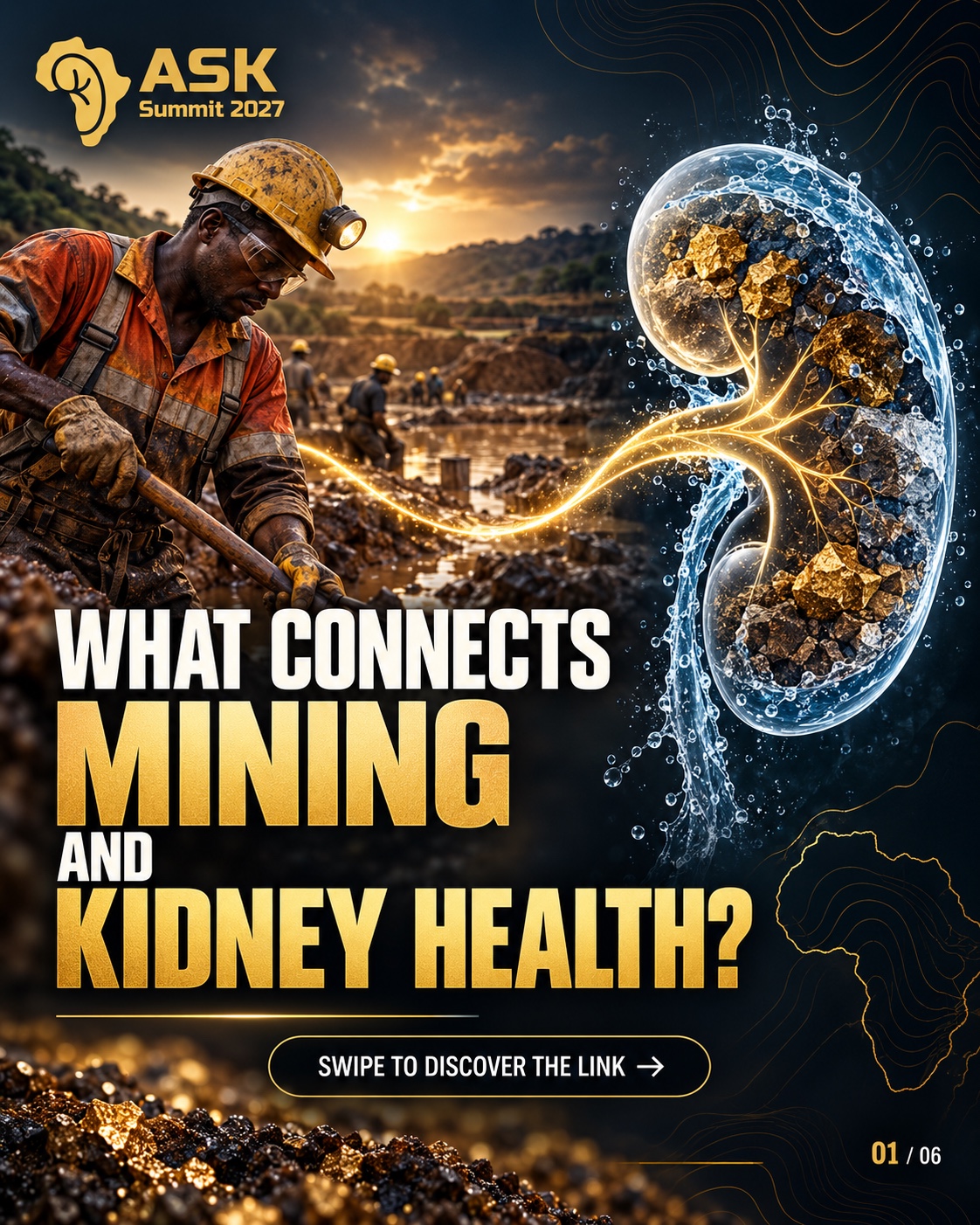
What connects mining and kidney health?
Why Mining and Kidney Health Belong in the Same Conversation
Mining is often discussed in terms of jobs, investment, exports and national development. Kidney health, by contrast, is usually treated as a clinical matter—something discussed in hospitals, laboratories and public-health programmes.
For communities connected to artisanal and small-scale mining, however, these two conversations cannot remain separate.
The conditions in which minerals are extracted and processed can shape the air people breathe, the water they use, the substances workers handle and the physical strain their bodies experience. At the same time, access to health education, early screening and specialist kidney care is often limited in remote and mining-affected communities.
This is why mining and kidney health belong in the same room, on the same agenda and within the same plans for sustainable development.
The kidneys: vital, hardworking and easy to overlook
The kidneys perform essential work every day. They filter waste and excess fluid from the blood, help maintain the body’s balance of water and minerals, support blood-pressure control and contribute to red-blood-cell and bone health.
Kidney damage may develop without obvious early symptoms. A person can therefore feel well while their kidney function is already declining. By the time unmistakable symptoms appear, the disease may be more advanced and treatment more complex and costly.
That makes prevention and early detection especially important. It also means kidney health should not be considered only after someone reaches a dialysis unit. The conversation must begin much earlier—at the level of working conditions, environmental protection, public awareness, routine screening and access to primary care.
Where mining and kidney health meet
Artisanal and small-scale mining provides income and opportunity for millions of people. It supports households, local economies and national mineral value chains. Recognising its importance does not require us to ignore the health risks that can arise when miners and surrounding communities work or live without adequate safeguards.
The connection between mining and kidney health can involve several overlapping pathways.
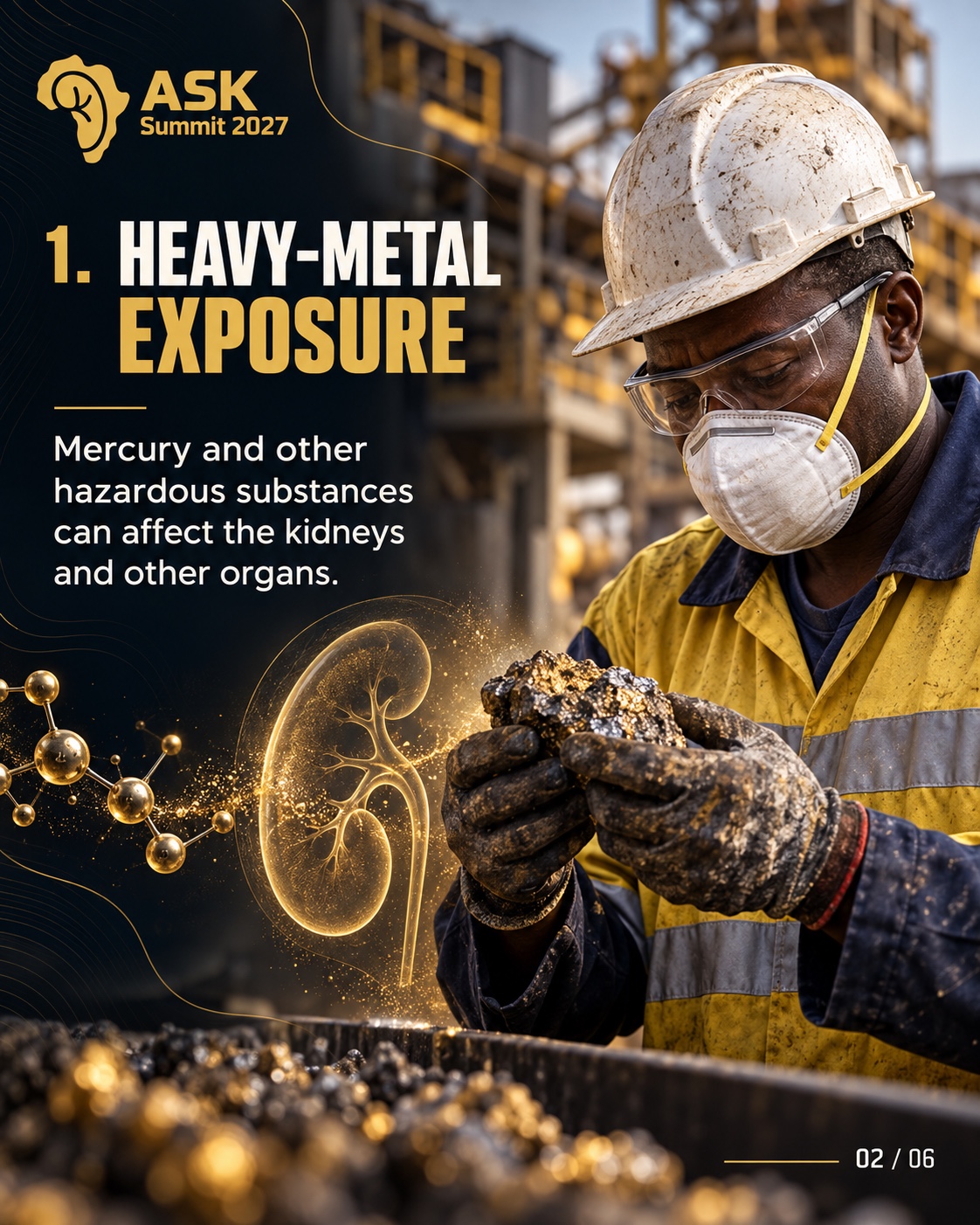
1. Chemical and heavy-metal exposure
Some mining and mineral-processing activities can expose workers and communities to hazardous substances. The International Labour Organization identifies mercury, cyanide, sulphuric acid and solvents among the chemicals used in parts of the mining sector, with workers in informal settings and lower-income countries facing particular risk when exposure is poorly controlled.
Mercury is of special concern in artisanal and small-scale gold mining. It may be used to separate gold from ore, and unsafe handling or burning can expose miners, processors, families and nearby communities. The World Health Organization has warned that mercury exposure can affect several organs, including the kidneys and nervous system.
The level of risk depends on the substance, dose, route and duration of exposure. This is precisely why stronger monitoring, safer processing methods, protective equipment, education and evidence-based regulation matter.
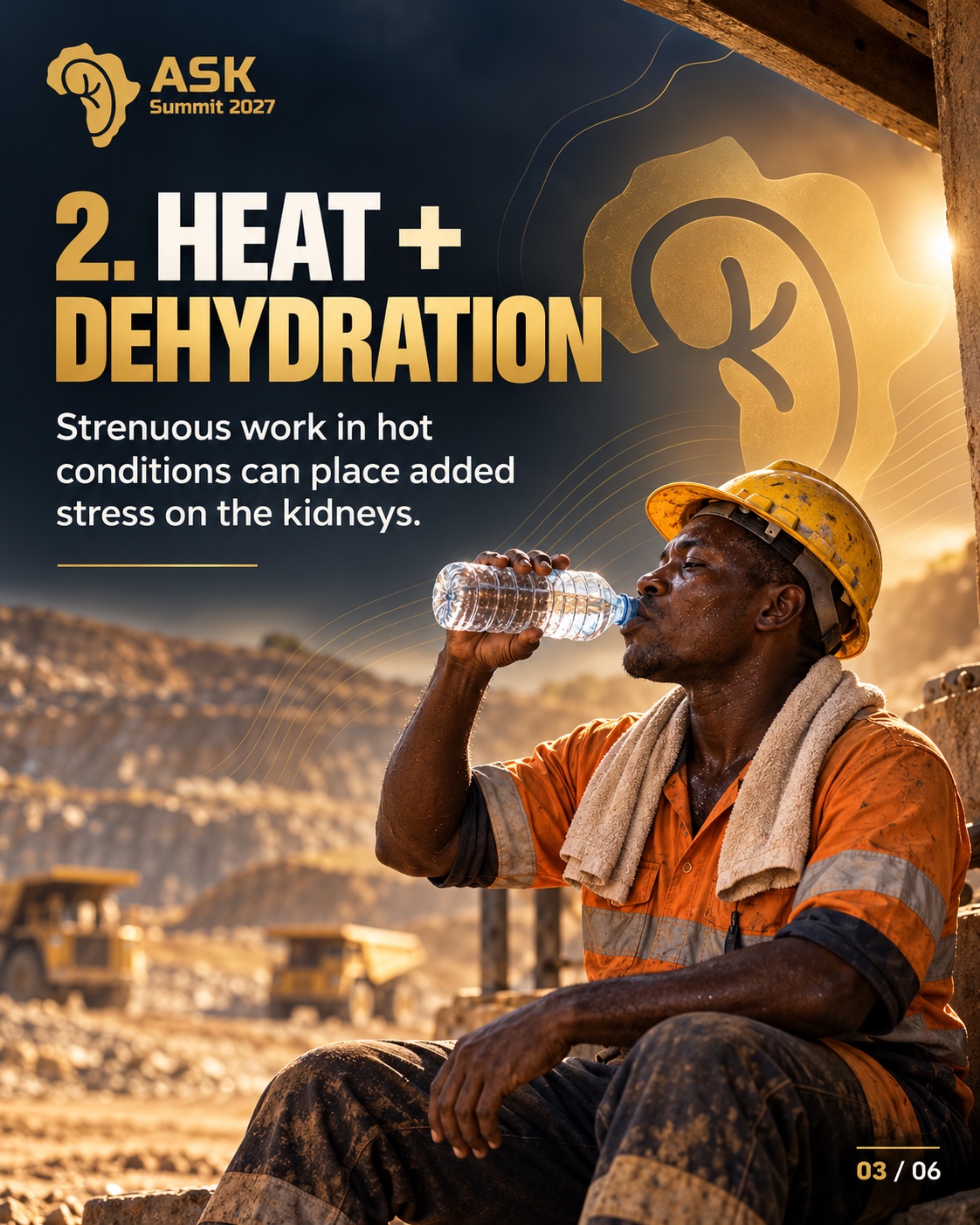
2. Heat, dehydration and physical strain
Mining can involve strenuous physical work in hot outdoor or underground environments. Heat stress and repeated dehydration do more than cause discomfort: they place additional strain on the body. The World Health Organization lists dehydration and impaired kidney function among the health effects associated with workplace heat stress.
Safe water access, appropriate rest breaks, heat-action plans, worker education and well-designed occupational-health policies are therefore also kidney-health interventions.
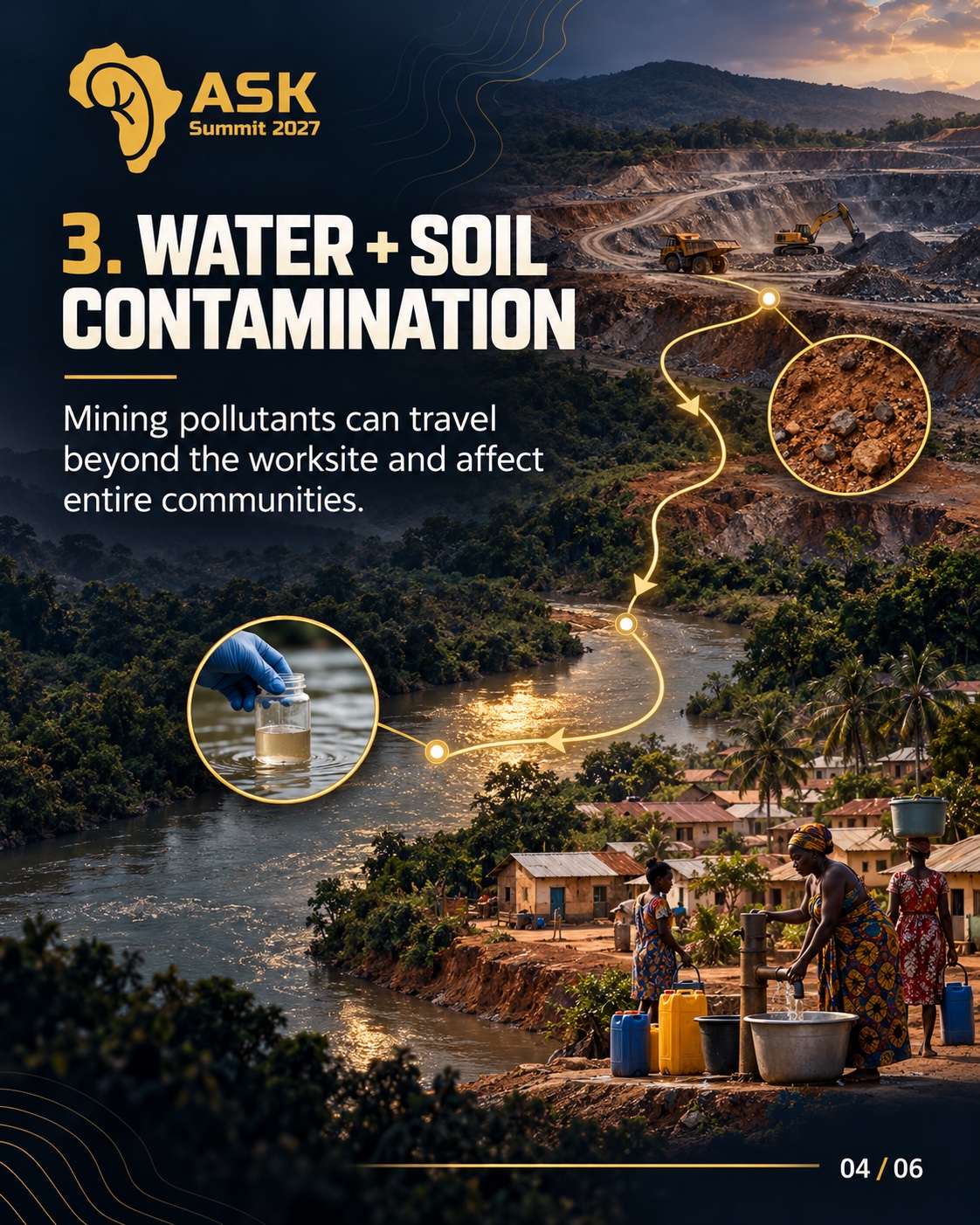
3. Environmental pathways
Mining-related pollutants can move beyond the immediate worksite. When hazardous substances enter soil or water systems, exposure may extend to households and communities that do not participate directly in mining. This makes environmental monitoring, safe waste management, water protection and site rehabilitation part of the public-health response.
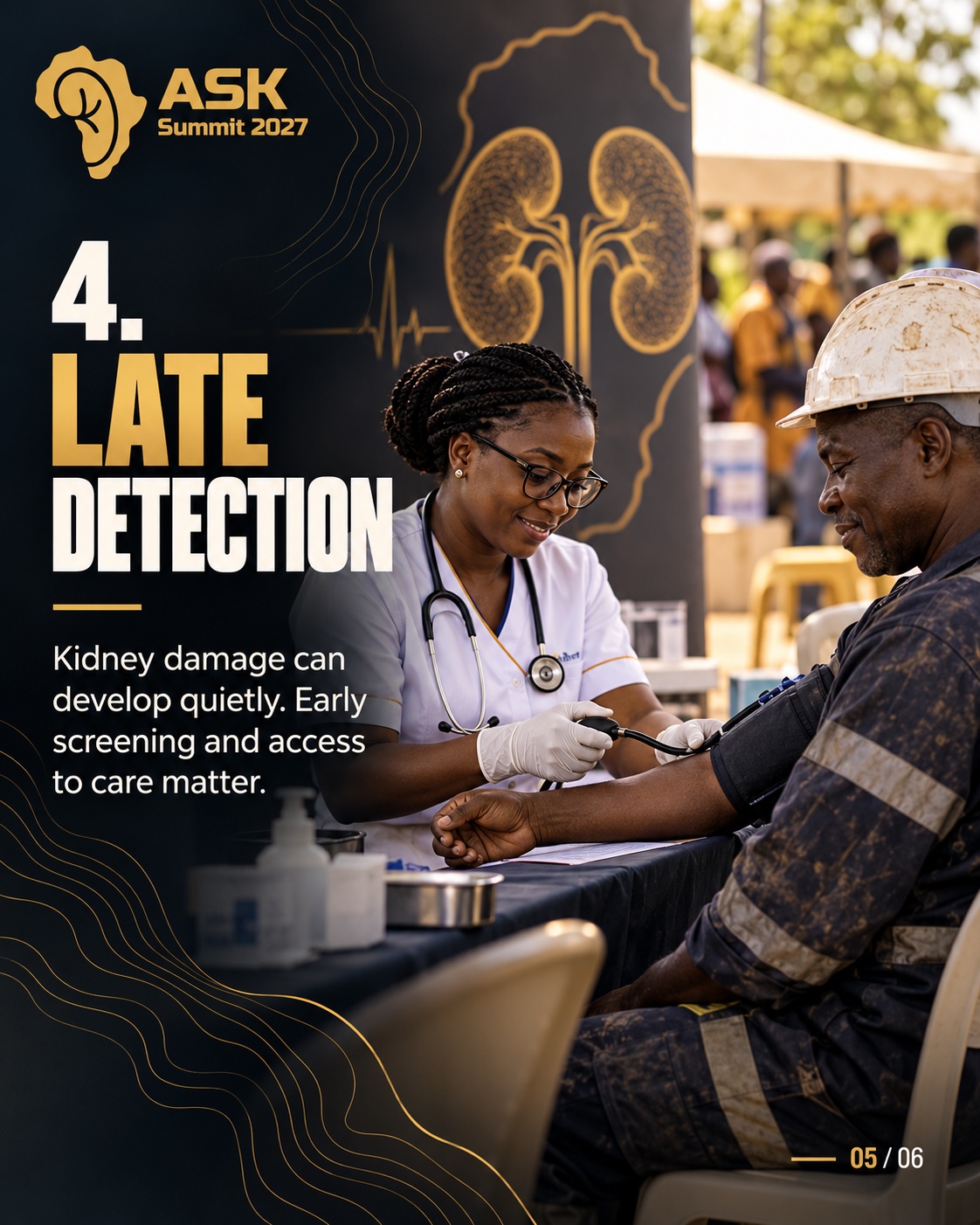
4. Delayed diagnosis and unequal access to care
Even where risk exists, it does not automatically lead to timely diagnosis. Mining communities may have limited access to kidney-function testing, environmental-health expertise, nephrologists or dialysis services. Health effects may be missed, misattributed or recorded only when they have become severe.
Closing this gap requires community-based awareness, accessible screening, better health data, clear referral pathways and stronger renal-care capacity.
A shared challenge needs a shared response
No single profession or institution can solve this challenge alone.
Clinicians can diagnose and treat disease, but they may not control conditions at mining sites. Mining companies and associations can improve operational practices, but they need credible evidence, practical standards and community trust. Researchers can identify patterns and risks, but findings must reach policymakers and people on the ground. Governments can set and enforce policy, but implementation depends on industry, health systems, development partners and communities working together.
Most importantly, miners and mining-affected communities must be included as partners. Their lived experience can show where policies are failing, what barriers prevent safer practices and which interventions are realistic in local settings.
Collaboration turns separate pieces of knowledge into coordinated action. It can help Africa to:
- build stronger evidence on kidney health in mining-affected areas;
- expand early screening and referral programmes;
- reduce harmful exposure through safer mining and processing practices;
- strengthen occupational-health and environmental safeguards;
- improve access to specialist renal care;
- align public-health goals with responsible mining and sustainable livelihoods; and
- create clear commitments, financing mechanisms and accountability.
Introducing ASK Summit 2027
The African Small-scale Mining and Kidney Health Summit—ASK Summit 2027—has been created to make that collaboration possible.
Taking place on 6–7 May 2027 at the Western Serene Atlantic Hotel in Takoradi, Western Region, Ghana, the Summit will bring together healthcare professionals, researchers, environmental scientists, policymakers, mining-sector leaders, development organisations and mining communities.
ASK Summit is designed around a simple but powerful principle: evidence must lead to action.
The Summit will create space to examine the relationship between mining practices, occupational and environmental exposure, kidney health and access to care. It will also enable stakeholders who do not often share the same platform to exchange knowledge, develop practical solutions and shape policies that protect people while supporting safer and more responsible mining.
This is not a conversation against mining. It is a conversation about how mining can contribute to development without leaving workers and communities to carry avoidable health costs.
From dialogue to a lasting legacy
The value of ASK Summit will be measured not only by the quality of its discussions, but by what follows them.
A defining intended outcome is the Takoradi Declaration, a proposed shared framework for protecting kidney health in mining-affected communities across West Africa. Developed through multi-stakeholder dialogue, the Declaration is intended to translate scientific evidence into measurable policy commitments, coordinated action and long-term accountability.
ASK Summit 2027 will also spotlight the proposed Yareyeya Dialysis & Renal Care Clinic in Ghana’s Prestea Huni-Valley Municipal District. Envisioned for one of the country’s active artisanal-mining regions, the facility represents the kind of tangible investment required alongside policy: stronger diagnosis, treatment and specialist renal care closer to the communities that need it.
Together, these initiatives reflect the Summit’s wider purpose—Advancing Science. Shaping Policy. Protecting Communities.
One conversation, one responsibility
Kidney health cannot be protected by the health sector alone, and responsible mining cannot be achieved without considering human health.
Bringing these issues together allows us to move from reacting to advanced disease towards preventing harm; from isolated projects towards shared strategy; and from good intentions towards measurable results.
ASK Summit 2027 invites governments, health leaders, researchers, mining stakeholders, investors, development partners and community representatives to take part in that shift.
Because the future of mining should not be measured only by what is taken from the ground. It should also be measured by how well we protect the people and communities whose lives are connected to it.
Join ASK Summit 2027 in Takoradi, Ghana, and help shape a healthier, safer and more responsible future for mining across Africa.
Book your delegate pass | Explore ASK Summit | Learn about the Takoradi Declaration
Editorial source notes
- ASK Summit: About the Summit
- ASK Summit: Attend ASK Summit 2027
- ASK Summit: Takoradi Declaration
- ASK Summit: Yareyeya Dialysis & Renal Care Clinic
- World Health Organization: Workplace heat stress
- World Health Organization: Mercury exposure and health impacts in artisanal and small-scale gold-mining communities
- International Labour Organization: Chemical exposures in mining
- National Institute of Diabetes and Digestive and Kidney Diseases: Your kidneys and how they work
Editorial note: This article is for public education and summit communication. It does not provide medical advice or claim that every person involved in mining will develop kidney disease. Risk depends on the nature, level, route and duration of exposure, individual health factors and access to preventive measures.